

Glint Search
When all else has failed. In all conditions. Find people lost at sea.Search and rescue detection of small vessels and life rafts is a critical challenge.
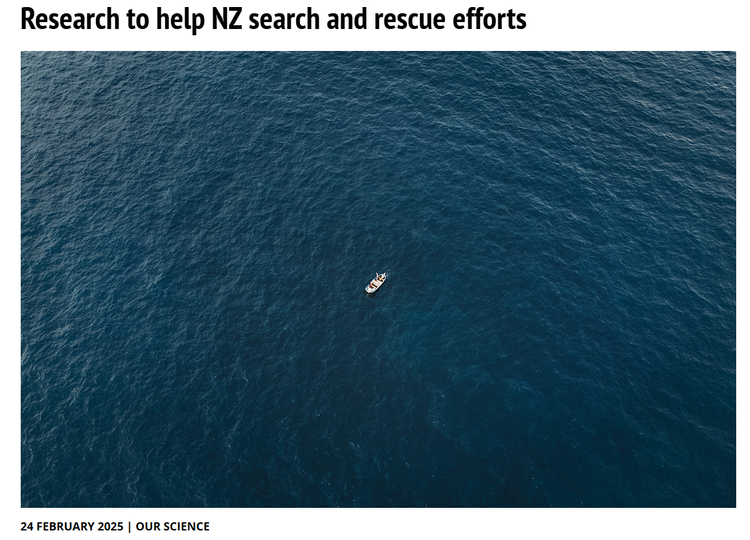
Small wooden or plastic boats, and especially unpowered life rafts, have minimal radar cross-section and are virtually invisible to both marine radar and satellite imaging systems.
In collaboration with Defence Science & Technology and the University of Auckland, we are creating foldable, low-cost marine radar reflectors engineered for high visibility in space-based synthetic aperture radar (SAR) imagery.
Paired with AI detection algorithms, we automate and enhance search operations using satellite data at a significantly higher success rate and lower cost than current approaches.
See us in the news…
-

"Space meets New Zealand's aviation and ocean innovators"
-
"From satellite data to search and rescue: an emerging researcher’s journey"
-
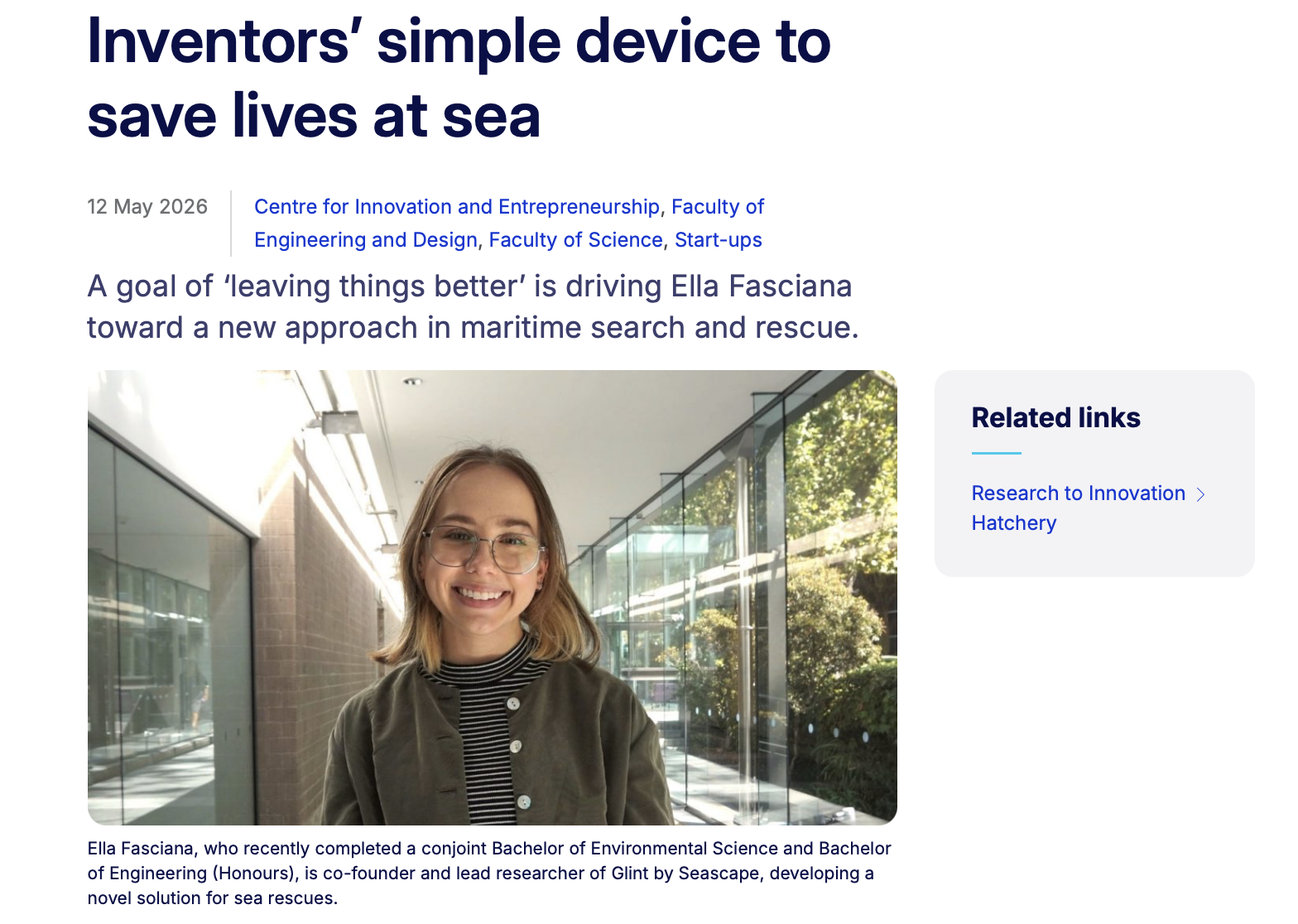
"Inventors’ simple device to save lives at sea"
-
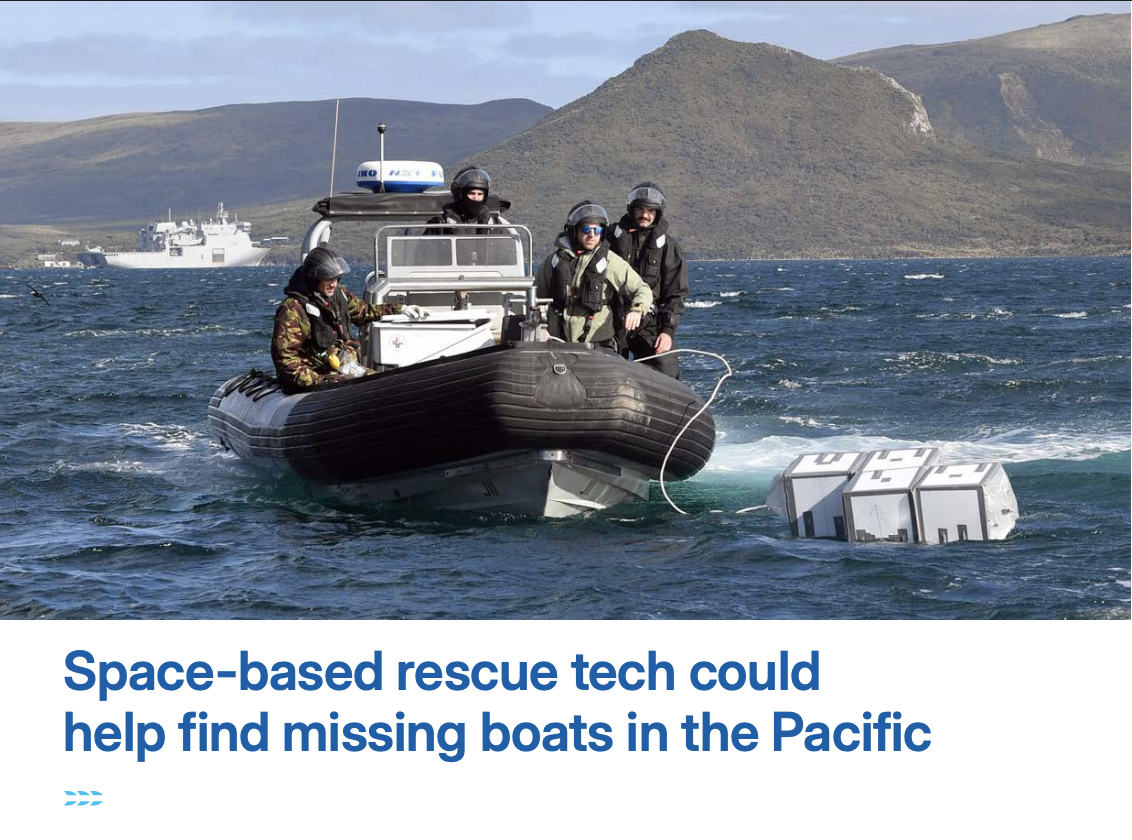
"Space-based rescue tech could help find missing boats in the Pacific"
-
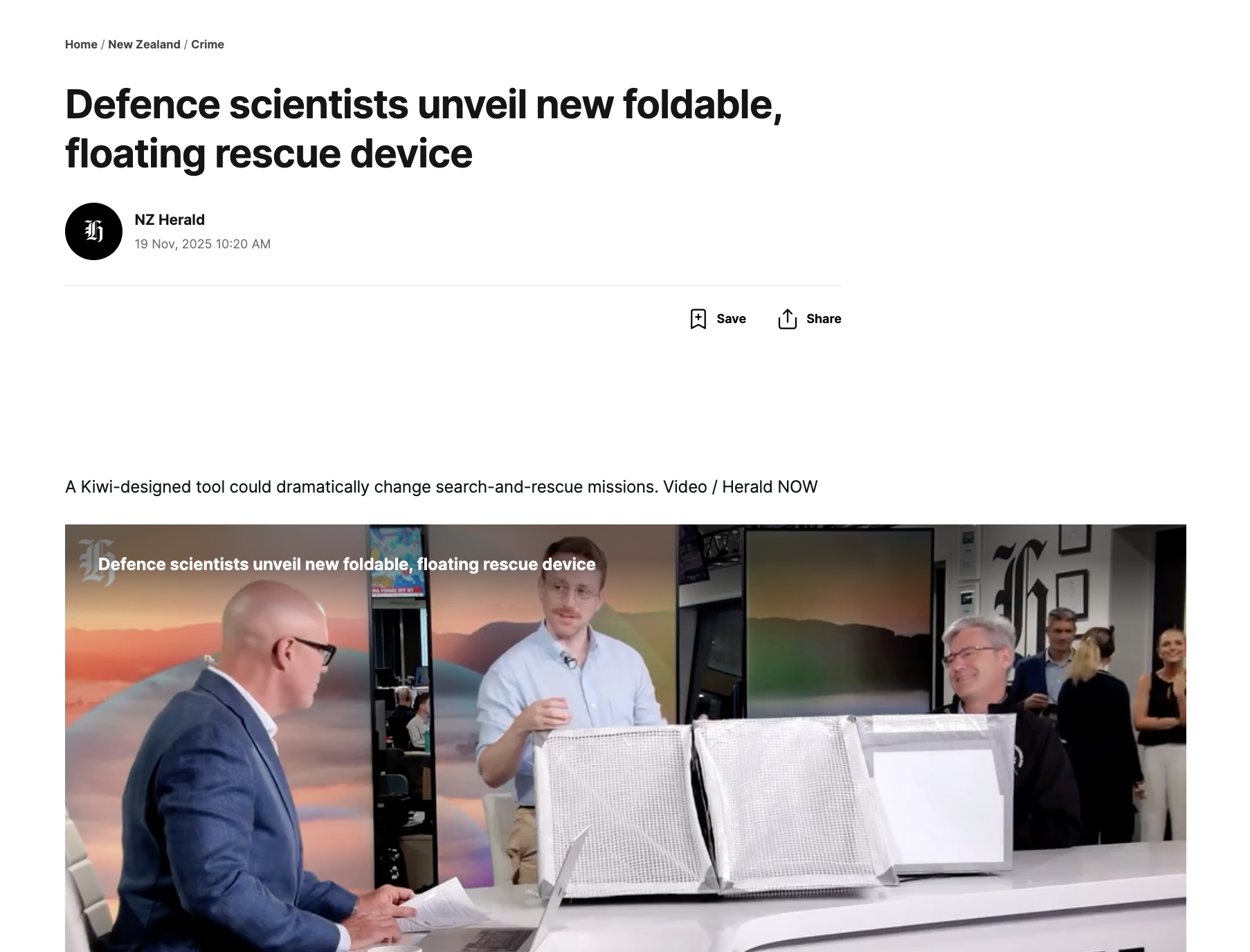
"Defence scientists unveil new foldable, floating rescue device"
-
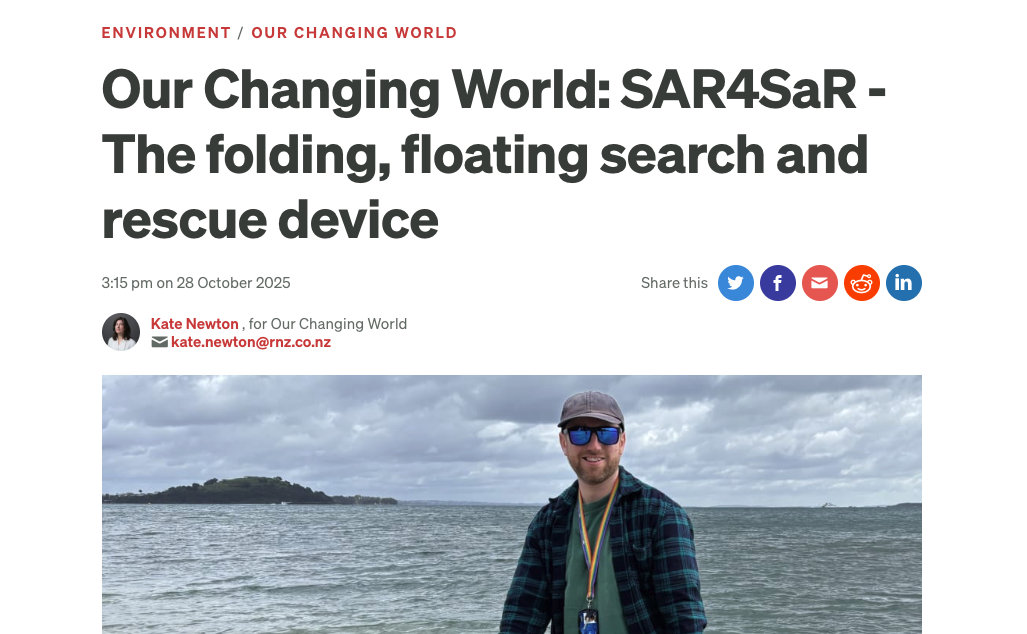
"Our Changing World: SAR4SaR - The folding, floating search and rescue device"
-
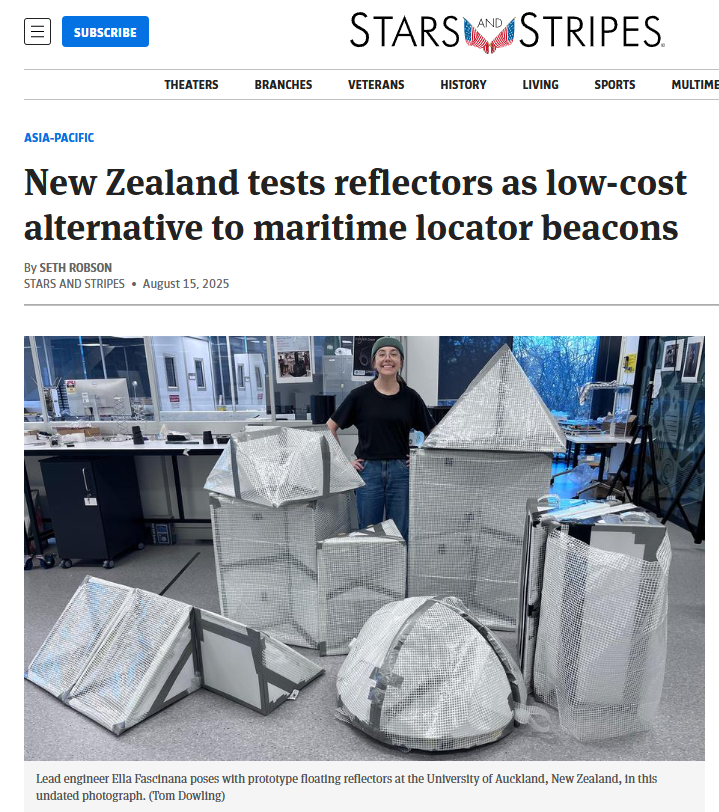
"New Zealand tests reflectors as low-cost alternative to maritime locator beacons"
-

SAR4SAR on TVNZ Breakfast Show
-
"University of Auckland and NZDF creating reflector to help people lost at sea"
-
"SAR4SAR – a new eye in the sky for search and rescue"
-
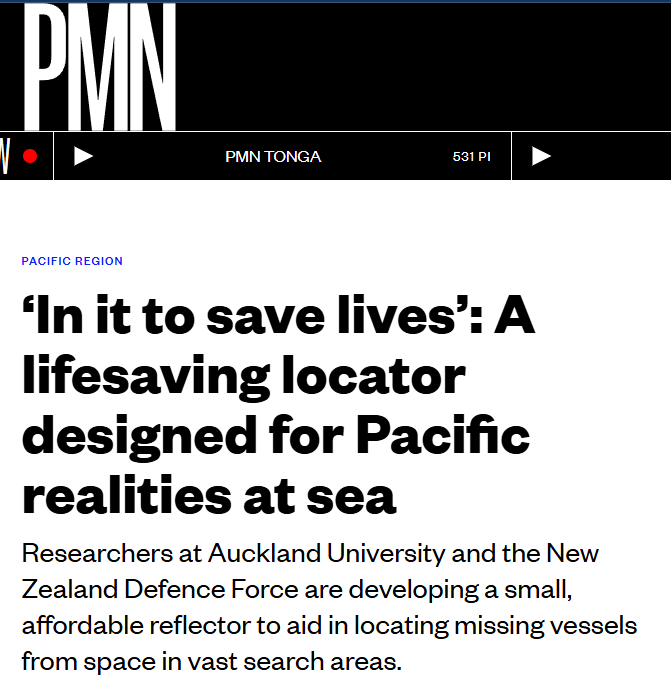
"‘In it to save lives’: A lifesaving locator designed for Pacific realities at sea"
-
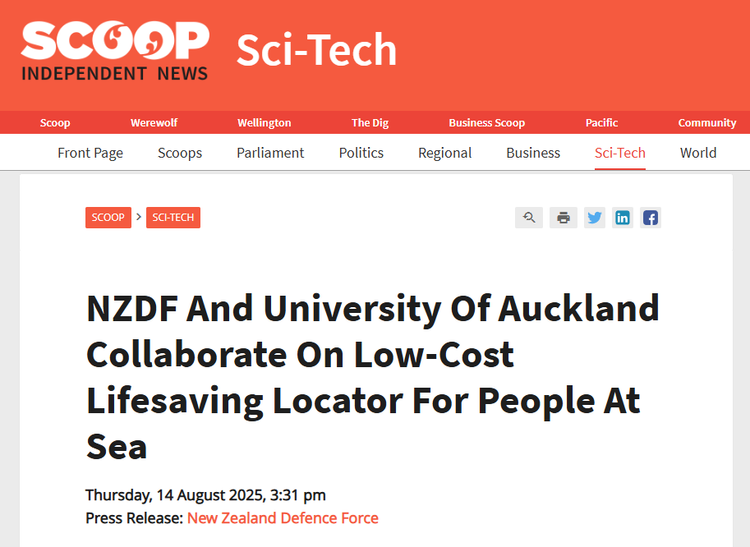
"NZDF And University Of Auckland Collaborate On Low-Cost Lifesaving Locator For People At Sea"
-
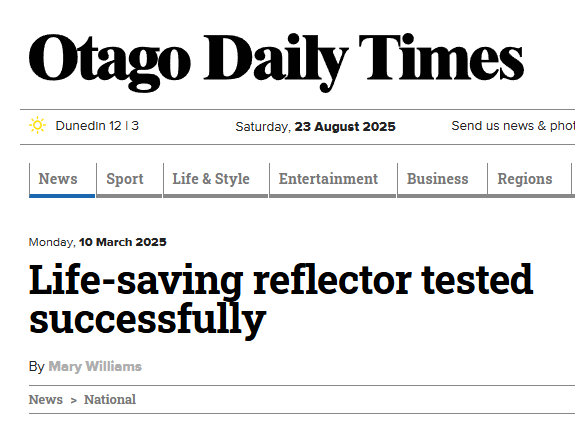
"Life-saving reflector tested successfully"
-
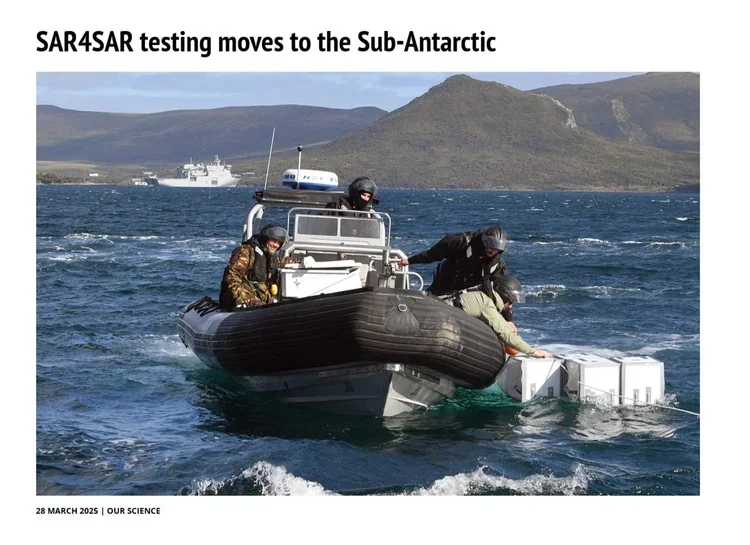
"Following the successful completion of land-based trials last year, five reflectors were down-selected for further evaluation. "
-
"In late 2024 personnel from UoA and DST installed six COTS and two novel radar reflectors, developed by UoA at the UoA Field Station near Ardmore (South Auckland) for the SAR4SAR phase 1 land trial. "